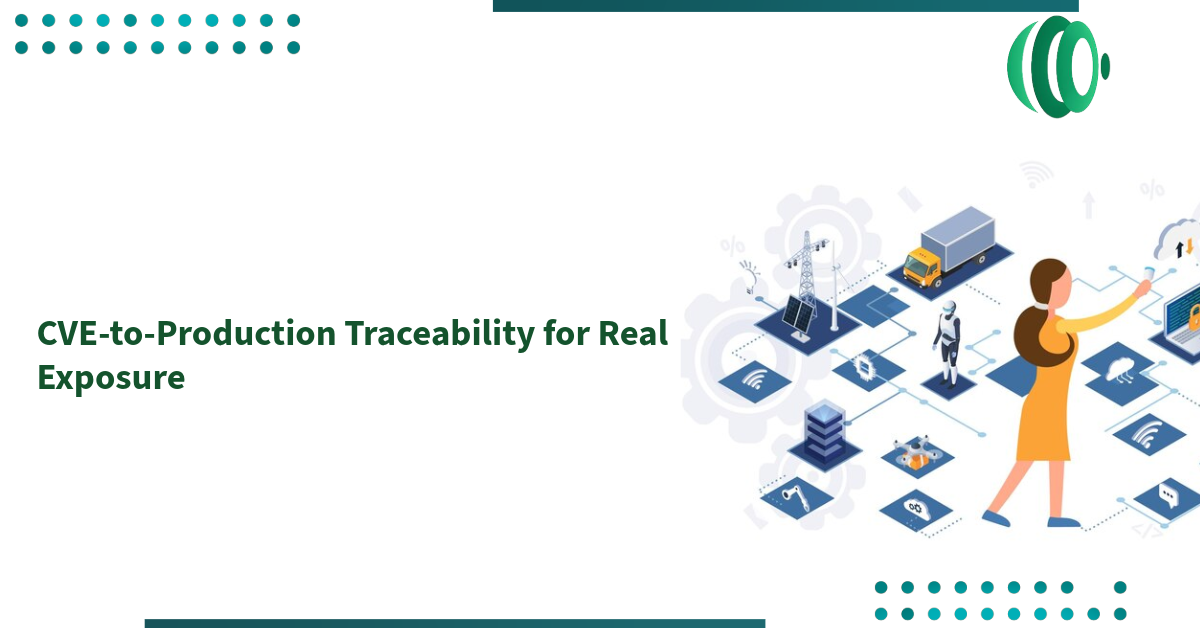
A decision graph records the reasoning, constraints, authority and outcome behind each manufacturing decision, while a governed Context Graph captures the operating environment it was made in. This post explains why AI fails in manufacturing without them and how together they form the Decision Infrastructure for trustworthy autonomy.
Why Does AI Fail in Manufacturing Automation — And What Decision Infrastructure Is Missing?
Manufacturing is entering a decisive transition. For decades, industrial automation focused on control — executing predefined logic reliably and at scale. Today, manufacturers are attempting something fundamentally harder: automating judgment.
Predictive maintenance, adaptive scheduling, autonomous quality control, and self-optimizing plants promise step-change improvements in uptime, yield, and safety. Yet most initiatives stall in pilots or remain advisory.
The root cause is not poor data quality.
It is not insufficient model accuracy.
The deeper issue is structural: modern manufacturing systems lack a decision substrate capable of governing autonomous choices across complex operational constraints.
This is where a Context OS and Decision Infrastructure become foundational — introducing Governed Context Graphs and Decision Graphs that make autonomous decisions explainable, auditable, and safe.
TL;DR
- Manufacturing systems capture events and signals, but not the decisions behind operational actions.
- AI systems fail in industrial environments because they lack context, authority verification, and decision memory.
- Context Graphs capture the operational environment in which decisions occur.
- Decision Graphs record the reasoning, constraints, and authority behind every operational decision.
- Together, they form a Decision Infrastructure that enables trustworthy autonomy in manufacturing systems.
See how Context OS governs AI agent decisions
Context OS builds governed Context Graphs and Decision Graphs so plant AI decisions stay explainable and authorized.
Why Does AI Fail in Manufacturing Automation?
AI initiatives in manufacturing often fail not because models are inaccurate, but because AI systems lack contextual judgment and operational authority.
Industrial AI agents must operate within a highly constrained environment:
- safety rules
- regulatory compliance
- production commitments
- equipment health
- operator authority
- maintenance constraints
Traditional AI models only interpret signals. They do not understand the decision environment in which those signals exist.
Without this decision substrate:
- automation recommendations conflict with operational reality
- safety or authority constraints are bypassed
- explainability collapses during audits
- trust erodes after the first operational incident
This problem is architectural rather than algorithmic.
AI in manufacturing fails when context and decisions are not first-class infrastructure components.
FAQ
Why does AI fail in manufacturing automation?
Because industrial AI lacks contextual judgment, authority verification, and decision memory rather than model accuracy.
Why Do Manufacturing Systems Capture State but Not Decisions?
Modern manufacturing environments are highly instrumented and automated. Plants operate with multiple operational systems designed to track state and events.
Common industrial systems include:
- PLCs and DCS – execute deterministic control logic
- SCADA systems – visualize real-time plant state
- Industrial historians – store time-series process data
- MES / MOM platforms – manage production workflows and quality
- CMMS systems – track maintenance activity
These systems answer operational questions such as:
- What happened?
- When did it happen?
- Where did it happen?
However, they cannot answer decision-critical questions:
- Why was this decision made?
- Which constraints were considered?
- What alternatives were evaluated and rejected?
- Who had authority to approve the action?
- What precedent informed this decision?
Manufacturing today has systems of record for events, but no system of record for decisions.
This gap prevents safe autonomous operations.
FAQ
What is missing from modern manufacturing systems?
Manufacturing systems record operational events but rarely capture the reasoning and authority behind decisions.
Why Does AI Break Without Context in Manufacturing Systems?
Industrial AI must reason across multiple competing realities simultaneously:
- asset degradation and maintenance risk
- process operating regimes
- production scheduling commitments
- regulatory and safety constraints
- organizational authority and escalation paths
Human operators resolve these trade-offs through experience and contextual awareness.
AI systems cannot do this unless the decision environment is explicitly modeled.
Without a shared Decision Infrastructure, AI systems fail in predictable ways.
| Failure Mode | Manifestation |
|---|---|
| Context Rot | Asset conditions drift beyond model assumptions |
| Context Pollution | Irrelevant signals distort recommendations |
| Context Confusion | Operating regimes misinterpreted |
| Decision Amnesia | Similar cases exist but no precedent retrieved |
These failures are systemic rather than exceptional.
When context and decisions are not captured as infrastructure:
- automation becomes unsafe
- recommendations contradict operational reality
- regulatory explainability collapses
- operators lose trust in AI systems
This is fundamentally an architectural problem, not a modeling problem.
FAQ
What causes AI decision failures in manufacturing systems?
AI systems fail when they lack shared operational context and decision memory.
What Is a Governed Context Graph in Manufacturing?
A Governed Context Graph represents the operational environment in which manufacturing decisions occur.
It is not:
- a graph database
- a static asset hierarchy
- a manually designed ontology
Instead, it is a continuously evolving model of the plant’s operational context.
In manufacturing environments, the Context Graph accumulates knowledge such as:
- which sensors matter for specific decisions
- how assets interact under different operating regimes
- how throughput, quality, and safety trade off in practice
- how human authority structures influence operational decisions
- which constraints dominate during abnormal conditions
Critically, the Context Graph is learned from real decision traces rather than designed manually.
It reflects how the plant actually operates, not how the system was originally diagrammed.
This distinction allows AI systems to reason within the true operational environment.
Get the Executive Blueprint for governed enterprise AI
A practical guide for CIOs, CAIOs and risk leaders on moving AI agents from pilot to production without losing control of context or decisions.
What Is a Decision Graph and Why Is It Important?
If the Context Graph represents the environment of a decision, the Decision Graph records the decision itself.
A Decision Graph captures the complete Decision Lineage of an operational action.
| Element | What It Records |
|---|---|
| Trigger | Anomaly, deviation, or yield loss |
| Context Assembled | Asset health, process state, production schedule |
| Constraints Evaluated | Safety, regulatory, quality constraints |
| Alternatives Considered | Possible actions and why they were rejected |
| Authority Verified | Who had the authority to approve the action |
| Action Taken | Final operational decision |
| Outcome Observed | Resulting operational outcome |
Each operational decision becomes a first-class artifact.
This enables:
- explainable AI decisions
- regulatory defensibility
- precedent retrieval for future cases
- operational learning across production cycles
FAQ
What is a Decision Graph?
A Decision Graph records the reasoning, constraints, authority, and outcomes behind operational decisions.
Control Systems vs Decision Systems
| Control Systems | Decision Systems |
|---|---|
| Execute deterministic logic | Reason across constraints |
| React to thresholds | Evaluate trade-offs |
| Log events | Capture decision lineage |
| Implicit trust | Benchmark trust |
| Authority assumed | Authority verified |
FAQ
What is the difference between control systems and decision systems?
Control systems automate actions, while decision systems automate reasoning and judgment.
Conclusion: Why Manufacturing Needs Decision Infrastructure
Manufacturing’s future is not simply smarter machines.
It is plants that understand decisions, not just signals.
Without Context Graphs and Decision Graphs:
- AI autonomy remains experimental
- operational reality conflicts with automation
- audits depend on human recollection
- trust erodes quickly
With Decision Infrastructure:
- autonomy becomes production-ready
- decisions are auditable by design
- operational learning compounds over time
- every action remains defensible years later
Enterprises must choose whether their systems record events or record decisions.
The latter is the foundation of trustworthy industrial autonomy.
Take the next step
Download the Executive Blueprint, or talk to our team about decision graphs for manufacturing operations.