AI agents in healthcare can help teams assemble relevant information, prepare work and coordinate follow-up across disconnected systems. Their value depends on accurate patient context, defined authority and a clear handoff to clinicians when a decision affects care. This guide explains practical use cases, a reference architecture and the safeguards needed to evaluate an agent before it acts.
What are AI agents in healthcare?
A healthcare AI agent is software that uses a defined goal, contextual data and approved tools to complete a sequence of tasks. It may retrieve records, draft a summary, create a work item or route an exception. A conventional chatbot usually stops after producing an answer; an agent can also prepare or carry out a permitted workflow. Neither label, however, guarantees clinical safety or accuracy.
Consider a clinician preparing for an appointment. Information about active medications, recent laboratory results, referrals and previous encounters may be held in separate systems. An agent can gather the relevant evidence and flag what changed. The clinician checks the source and makes the clinical decision. For a patient with a concerning symptom, the workflow needs a prompt route to an authorized care team under an approved protocol; an agent must not improvise a diagnosis or delay urgent care.
See how Context OS governs AI agent decisions
Context OS gives healthcare agents provenance-linked patient context, approval boundaries and decision traces before they act.
Why context matters more than a longer patient summary
A list of retrieved documents is insufficient when an item may be outdated or belong to a different encounter. A useful Context Graph connects identity, encounters, observations, medications, dates, provenance, care teams and applicable policies. Each fact should retain its source and time so a reviewer can distinguish a current prescription from one discontinued last week.
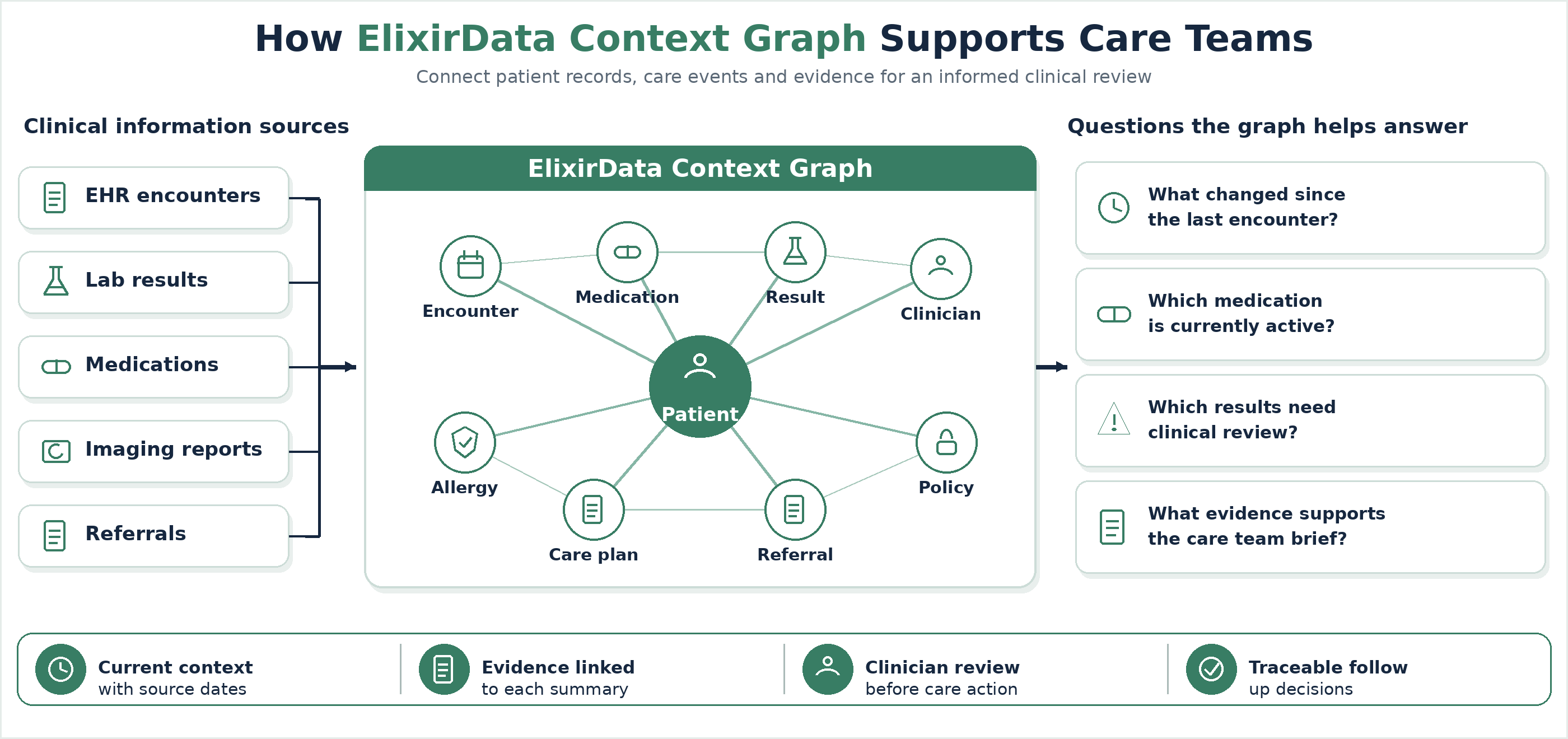
Figure 1: A patient context graph connects clinical sources, related records and review questions.
Interoperability standards help connect systems, but an implementation still needs identity resolution, data quality rules, consent or access controls and source reconciliation. The HL7 FHIR standard describes resources for exchanging healthcare information; adopting FHIR alone does not establish that a record is clinically current or complete.
High value healthcare agent use cases
Use Case 1: Clinical pre briefing
Before a visit, an agent can assemble an evidence-linked brief: recent admissions, medication changes, unresolved referrals and results that need review. It should label uncertainty, preserve timestamps and provide a direct route back to each source record. The clinician verifies the summary before relying on it. Measure time spent preparing, the rate of corrected summaries and whether critical changes were missed, rather than counting summaries alone.
Use Case 2: Patient access and routing
An agent can classify requests, check scheduling constraints and direct routine tasks to the right queue. Symptom-related messages require locally approved escalation criteria and reliable failover. A request about a refill is operationally different from a report of breathing difficulty after starting medication. The latter should trigger the organization’s urgent escalation pathway, with the interaction documented for the care team.
Use Case 3: Discharge and post acute coordination
After discharge, agents can check whether a follow-up appointment is booked, whether instructions have been delivered and whether a care coordinator needs to resolve an exception. The agent may prepare an outreach task or confirm completion in approved systems. Medication advice and changes to a care plan require the designated clinical workflow and professional review.
Use Case 4: Documentation and revenue cycle
For lower risk administrative work, agents can find missing documents, assemble a denial packet or draft coding suggestions with supporting evidence. A qualified reviewer remains responsible for coding accuracy, payer requirements and final submission where the organization requires it. Useful measures include rework, processing time and exception rate.
Use Case 5: Hospital operations
In healthcare operations, bed availability, staffing, transport and discharge readiness interact. An operations agent can surface bottlenecks and propose a handoff when one delayed step blocks another. It should expose the source of each recommendation and respect clinical priorities and local capacity rules.
Get the Executive Blueprint for governed enterprise AI
A practical guide for CIOs, CAIOs and risk leaders on moving AI agents from pilot to production without losing control of context or decisions.
How a governed healthcare agent works
An agent workflow should be specified as a set of bounded decisions. It detects an event, assembles current context, proposes a next step, applies policy, requests approval when required, acts through an authorized tool, verifies the result and records an audit trail. The action and the approval rule must be explicit for each use case.
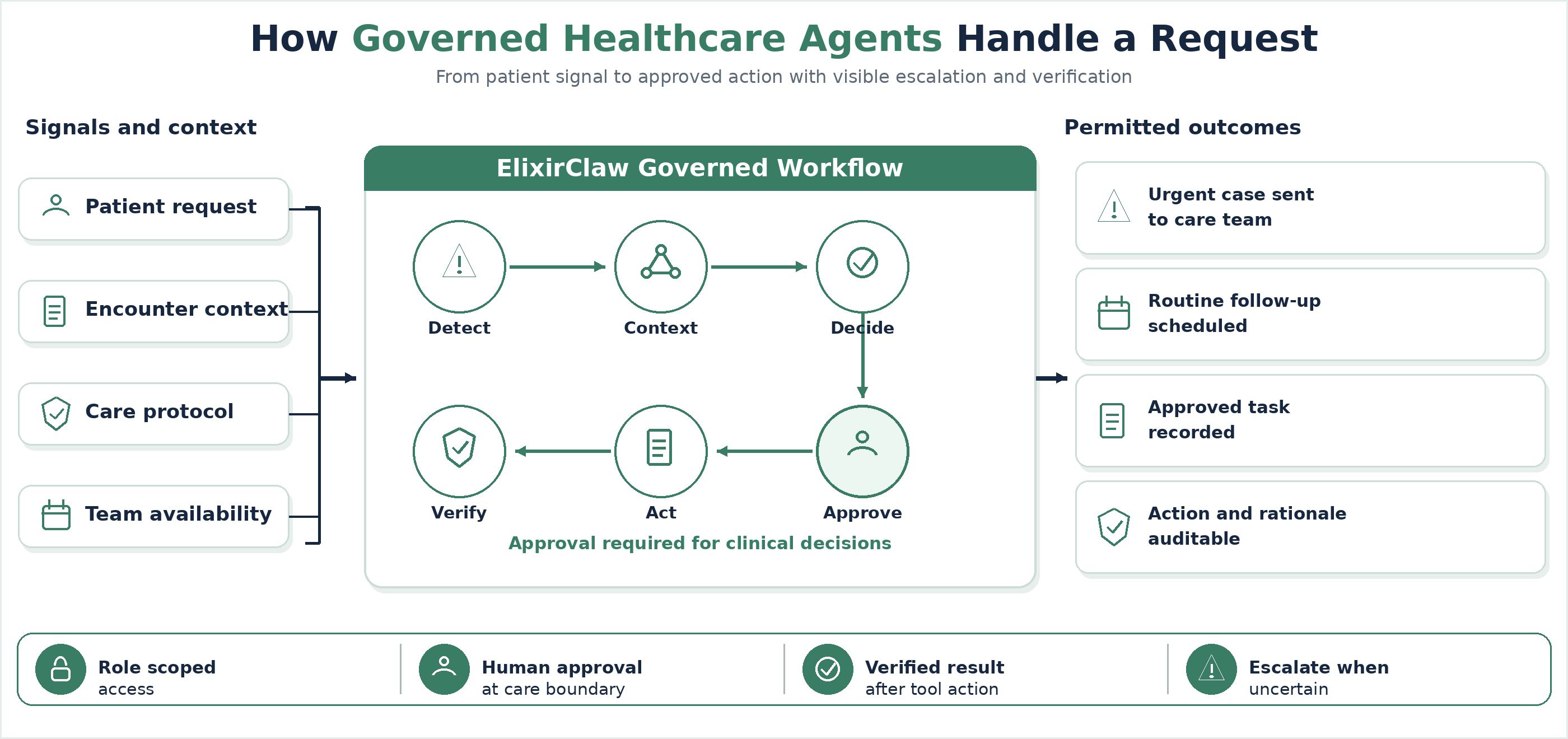
Figure 2: The approval step is part of the workflow, not an optional final check.
-
Read and prepare: retrieve information, draft a brief or recommend a task with evidence.
-
Approve before action: require an authorized person for clinical decisions, sensitive communications and other designated steps.
-
Bounded execution: let the agent perform specified low risk administrative actions under role-based permissions and logging.
-
Escalate or stop: route ambiguous, urgent or unsupported cases to a person and fail safely when a source or tool is unavailable.
When an agent uses protected health information in the United States, the deployment must be assessed against applicable HIPAA requirements. HHS guidance on business associates includes some third party AI chatbots serving patient portals among its examples. Agreements, permitted uses and security controls depend on the actual arrangement; a product label does not establish compliance.
Reference architecture for AI agents in healthcare
The architecture separates connected records from reusable capabilities and execution. This makes it easier to change one part of a workflow without silently expanding what an agent can access or do.
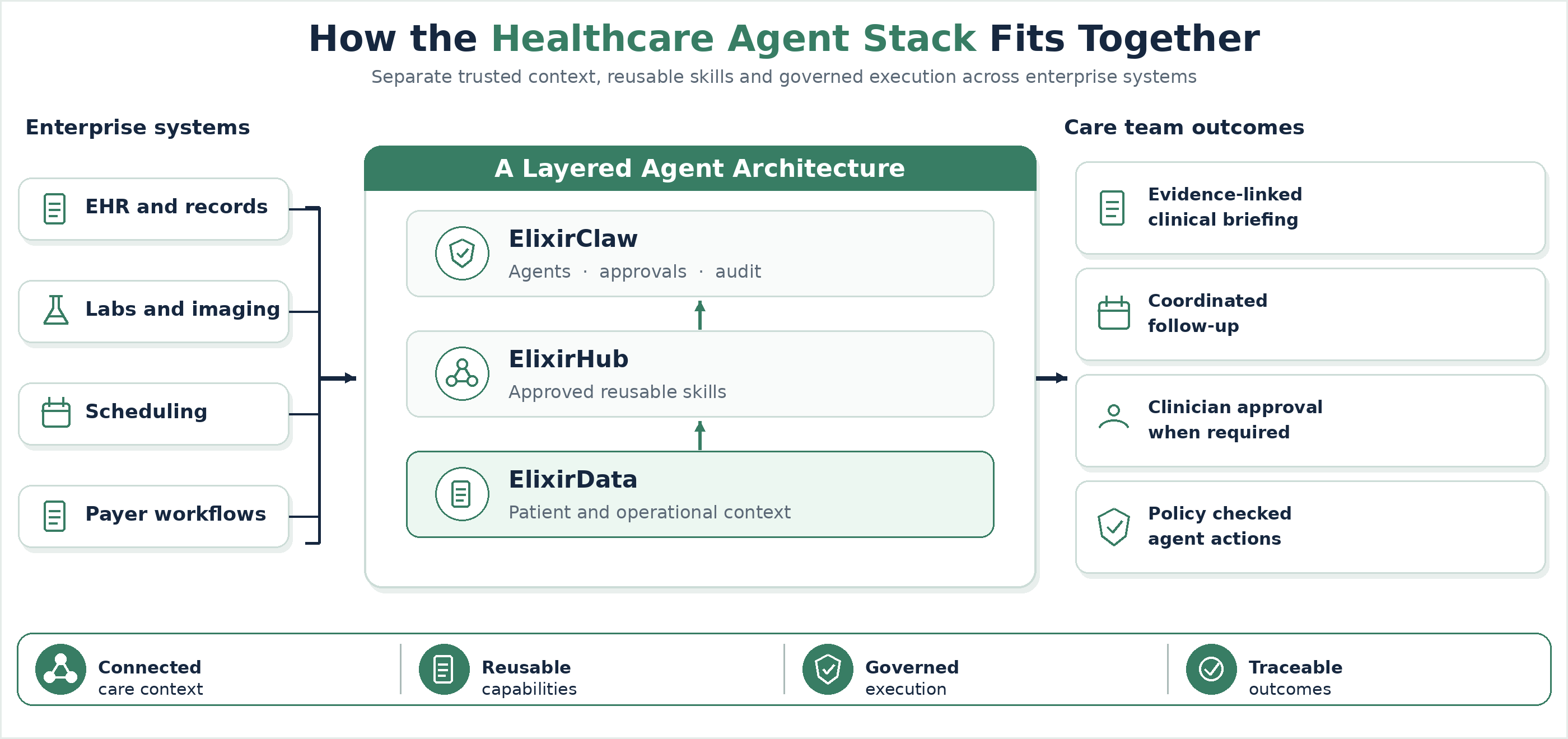
Figure 3: Context, reusable skills and governed execution in a healthcare reference architecture.
-
ElixirData, the Context OS, can organize relationships between patients, encounters, events and policy into a Context Graph, with provenance and time attached to retrieved evidence.
-
ElixirHub, the skills registry, can manage reusable, versioned capabilities such as retrieving an approved discharge checklist or preparing a structured handoff.
-
ElixirClaw, the Agentic OS, can coordinate agents, tools, permissions, human approvals and decision traces around the workflow.
The same architecture can support clinical decision traceability by keeping the evidence, approvals and actions associated with a workflow available for review.
A separate predictive model may provide a risk estimate or forecast as an input. The agent should retain the model version, input time and intended use, and should not treat a score as a clinical decision. If a capability is medical device software, assess its intended use and the applicable regulatory pathway, including the FDA overview of AI-enabled medical devices.
Controls to evaluate before deployment
-
Data and access: verify patient matching, freshness, provenance, minimum necessary access and retention settings.
-
Workflow safety: test urgent messages, uncertain inputs, tool failures, missing records and approval handoffs.
-
Clinical review: define who owns the protocol, who can approve an action and how the team corrects a flawed output.
-
Agent operations: monitor unsupported claims, missed escalations, inappropriate actions, completion rate and human overrides.
-
Change control: evaluate new models, prompts, skills and integrations against representative cases before release.
Start with a narrow workflow and a baseline. Run the agent in observation mode, compare its recommendations with actual outcomes, then expand permissions only when the evidence supports it. WHO guidance on AI for health emphasizes human autonomy, safety, transparency and accountability; those principles should be translated into testable workflow controls.
Conclusion
Healthcare agents are most useful when they reduce coordination work while keeping evidence, authority and accountability visible. A practical starting point is an evidence-linked workflow that prepares or routes work, has a clear clinical approval boundary and can be measured against real operational outcomes.
Take the next step
Download the Executive Blueprint, or talk to our team about governed AI agents for healthcare workflows.
Frequently asked questions
-
What is the difference between a healthcare chatbot and an AI agent?
A chatbot mainly responds to a prompt. An agent can use approved tools and follow a multi-step workflow, such as collecting evidence, preparing a task and recording the outcome. The actual authority depends on its configured permissions and oversight. -
Can AI agents make clinical decisions independently?
A healthcare organization should define the decision boundary for each use case. The examples here keep clinical decisions with authorized professionals and require urgent or uncertain cases to follow approved escalation pathways. -
How do AI agents connect to an EHR?
They may use supported APIs, integration platforms or other approved interfaces. Data exchange standards such as FHIR can help, while patient matching, provenance, permissions and write access still need local validation. -
What should a hospital pilot first?
Choose a narrow, measurable workflow such as evidence-linked pre-visit briefing or discharge task tracking. Baseline completion time and errors, test exception paths and review cases with the people responsible for the workflow. -
Does HIPAA compliance follow automatically from a private deployment?
No. Privacy and security obligations depend on who handles protected health information, the service arrangement, contractual terms and implemented safeguards. Assess each deployment against applicable requirements.