---
title: "Decision Traceability in Mining Operations: Safer, Smarter Operations"
description: Explore how Decision Traceability in Mining Operations supports safety, extraction, and environmental governance in modern mining operations.
image: https://www.elixirdata.co/hubfs/Xenon%20Daily%20Work-1%20-%202026-04-21T141821.165.png
---

The Context OS for Agentic Intelligence
[](https://www.elixirdata.co/)
- Platform
- [Context OS](https://www.elixirdata.co/platform/context-os/)
- [Unify Data](https://www.elixirdata.co/platform/unify-data/)
- [Business Context](https://www.elixirdata.co/platform/business-context/)
- [Decision Infrastructure](https://www.elixirdata.co/platform/decision-infrastructure/)
- [Build Agents](https://www.elixirdata.co/platform/build-agents/)
- [Governed Agentic Actions](https://www.elixirdata.co/platform/governed-actions/)
- [Decision Traces](https://www.elixirdata.co/platform/decisiontraces/)
Platform
The Decision Harness for Enterprise AI.
Three primitives. One dual-gate architecture. Every agent action compiled, governed, and recorded with full lineage.
[Explore Context OS →](https://www.elixirdata.co/platform/context-os/)
The Three Primitives
[⊞ Context Layer Decision-grade context compiled at the moment of decision](https://www.elixirdata.co/platform/context-os/) [⊛ Governance Layer Dual-gate policy enforcement — before reasoning, before execution](https://www.elixirdata.co/platform/decision-infrastructure/) [◈ Memory Layer Full-lineage Decision Traces, never summarized, never compressed](https://www.elixirdata.co/platform/decisiontraces/) [⟳ Feedback Band Closed-loop feedback and continuous improvement across all three layers](https://www.elixirdata.co/platform/business-context/)
Agentic Execution
[◉ Build Agents Design and deploy governed agents on Context OS](https://www.elixirdata.co/platform/build-agents/) [▤ Dual-Gate Architecture How every action flows through Gate 1 and Gate 2](https://www.elixirdata.co/platform/governed-actions/) [▦ Decision Traces Live audit record for every agent decision, audit-ready by default](https://www.elixirdata.co/platform/decisiontraces/) [↗ Trust Graduation Shadow → Supervised → Bounded → Full Autonomy](https://www.elixirdata.co/platform/unify-data/)
**Generic harnesses plateau.** Context OS compounds.
[Download Executive Blueprint →](https://www.elixirdata.co/resources/executive-blueprint/)
- Solutions
- [Operations & SRE](https://www.elixirdata.co/solutions/operations-sre/)
- [Security & SOC](https://www.elixirdata.co/solutions/security-and-soc/)
- [Risk & Compliance](https://www.elixirdata.co/solutions/governance-risk-compliance/)
- [Finance & Procurement](https://www.elixirdata.co/solutions/finance-and-procurement/)
- [Agentic Debugging](https://www.elixirdata.co/solutions/agentic-debugging/)
- [Agentic Code Simulations](https://www.elixirdata.co/solutions/agentic-code-simulations/)
- [Private AI Assistant with LLM Council](https://www.elixirdata.co/solutions/private-ai-assistant/)
- [Vision AI and Video Intelligence](https://www.elixirdata.co/solutions/vision-ai/)
- [Banking & Financial Services](https://www.elixirdata.co/industries/banking-and-financial-services/)
- [Manufacturing](https://www.elixirdata.co/industries/discrete-manufacturing/)
- [Transportation](https://www.elixirdata.co/industries/transportation/)
- [Public Safety](https://www.elixirdata.co/industries/public-safety/)
- [Travel & Hospitality](https://www.elixirdata.co/industries/travel-and-hospitality/)
- [Shipping & Logistics](https://www.elixirdata.co/industries/shipping-and-logistics/)
- [Emergency Services](https://www.elixirdata.co/industries/emergency-services/)
- [Energy & Utilities](https://www.elixirdata.co/industries/energy-utilities/)
- [Robotics & Physical AI](https://www.elixirdata.co/industries/robotics-and-physical-ai/)
- [Industrial Automation](https://www.elixirdata.co/industries/industrial-automation/)
Solutions
Built for regulated enterprise AI.
Find Context OS by the role you own or the industry you operate in. Every solution anchored to the same Decision Harness — governed context, dual-gate enforcement, full-lineage traces.
[View all solutions →](https://www.elixirdata.co/solutions/operations-sre/)
By Role
[⚖ Risk & Compliance Continuous risk governance with audit-ready Decision Traces](https://www.elixirdata.co/solutions/governance-risk-compliance/) [🛡 Security & SOC Governed threat detection and response with human-in-the-loop authority](https://www.elixirdata.co/solutions/security-and-soc/) [⚡ Operations & SRE Incident response grounded in validated context, every action traced](https://www.elixirdata.co/solutions/operations-sre/) [$ Finance & Procurement Approvals, thresholds, and spend controls enforced before execution](https://www.elixirdata.co/solutions/finance-and-procurement/)
By Industry
[🏦 Financial Services Model risk management, trading controls, regulatory defensibility](https://www.elixirdata.co/industries/banking-and-financial-services/) [⚕ Healthcare & Life Sciences Clinical decision support, emergency response, life-safety operations](https://www.elixirdata.co/industries/emergency-services/) [🏛 Public Sector Sovereign deployment, tenant isolation, data residency controls](https://www.elixirdata.co/industries/public-safety/) [⚙ Regulated Manufacturing Supply chain intelligence, operational safety, pre-deployment validation](https://www.elixirdata.co/industries/discrete-manufacturing/)
Don't see your fit? **Every solution is built on the same Decision Harness.**
[Request a custom briefing →](https://www.elixirdata.co/contact-us/)
- Industries
- [Industries Overview](https://www.elixirdata.co/industries/)
- [Discrete Manufacturing](https://www.elixirdata.co/industries/discrete-manufacturing/)
- [Industrial Automation](https://www.elixirdata.co/industries/industrial-automation/)
- [Robotics & Physical AI](https://www.elixirdata.co/industries/robotics-and-physical-ai/)
- [Energy & Utilities](https://www.elixirdata.co/industries/energy-utilities/)
- [Transportation](https://www.elixirdata.co/industries/transportation/)
- [Shipping & Logistics](https://www.elixirdata.co/industries/shipping-and-logistics/)
- [Telecommunications](https://www.elixirdata.co/industries/telco/)
- [Banking & Financial Services](https://www.elixirdata.co/industries/banking-and-financial-services/)
- [Travel & Hospitality](https://www.elixirdata.co/industries/travel-and-hospitality/)
- [Public Safety](https://www.elixirdata.co/industries/public-safety/)
- [Emergency Services](https://www.elixirdata.co/industries/emergency-services/)
Industries
AI Decision Infrastructure for Modern Industry Operations.
Governed, context-aware AI across industrial systems, critical infrastructure, regulated services, and public operations.
Industrial Systems
[⚙ Discrete Manufacturing Quality, traceability, and production governance](https://www.elixirdata.co/industries/discrete-manufacturing/) [⌘ Industrial Automation Safety boundaries for autonomous industrial systems](https://www.elixirdata.co/industries/industrial-automation/) [◉ Robotics & Physical AI Governed autonomy with human authority](https://www.elixirdata.co/industries/robotics-and-physical-ai/) [⚡ Energy & Utilities Safe, real-time grid decision governance](https://www.elixirdata.co/industries/energy-utilities/)
Mobility, Networks & Travel
[↗ Transportation Governed transport decisions with full lineage](https://www.elixirdata.co/industries/transportation/) [▦ Shipping & Logistics Routing, asset movement, and traceability](https://www.elixirdata.co/industries/shipping-and-logistics/) [⌁ Telecommunications Accountable AI for network operations](https://www.elixirdata.co/industries/telco/) [✦ Travel & Hospitality Governed, context-aware guest personalization](https://www.elixirdata.co/industries/travel-and-hospitality/)
Regulated & Public Services
[🏦 Banking & Financial Services Defensible decisions and regulatory controls](https://www.elixirdata.co/industries/banking-and-financial-services/) [🏛 Public Safety Explainable decisions with accountable lineage](https://www.elixirdata.co/industries/public-safety/) [⚕ Emergency Services Governed intelligence for critical response](https://www.elixirdata.co/industries/emergency-services/)
**Industry-specific operations.** One governed Decision Harness.
[Explore all industries →](https://www.elixirdata.co/industries/)
- Enterprise
- [Agent Registry](https://www.elixirdata.co/enterprise/agent-registry/)
- [AgentOps](https://www.elixirdata.co/enterprise/agentops/)
- [Agent Identity & Access](https://www.elixirdata.co/enterprise/agent-identity-and-access/)
- [Evaluation and Optimization](https://www.elixirdata.co/enterprise/evaluation-optimization/)
- [Trust Center](https://www.elixirdata.co/enterprise/trust-center/)
- [Privacy, Security & Compliance](https://www.elixirdata.co/enterprise/privacy-security-compliance/)
- [Data Residency & Isolation](https://www.elixirdata.co/enterprise/data-residency/)
- [Admin & Access Control](https://www.elixirdata.co/enterprise/agent-identity-and-access/)
- [SLAs & Support](https://www.elixirdata.co/enterprise/ai-sla-support/)
Enterprise
Enterprise control without slowing execution.
Operational governance and model-risk oversight capabilities, with evidence and controls designed to support review under applicable guidance, including SR 26-2.
[Visit Trust Center →](https://www.elixirdata.co/enterprise/trust-center/)
Agent Operations
[◉ Agent Registry Approve agents, scopes, tools, and versions with full lifecycle management](https://www.elixirdata.co/enterprise/agent-registry/) [◎ AgentOps Monitor execution, track boundary violations, one-click rollback](https://www.elixirdata.co/enterprise/agentops/) [⚿ Agent Identity Scoped access per task — no over-permissioning, no added risk](https://www.elixirdata.co/enterprise/agent-identity-and-access/) [↗ Trust Graduation Shadow → Supervised → Bounded → Full Autonomy lifecycle](https://www.elixirdata.co/enterprise/evaluation-optimization/)
Trust & Governance
[⛉ Trust Center SOC 2 Attested · ISO 9001 Certified · ISO/IEC 27001 Certified](https://www.elixirdata.co/enterprise/trust-center/) [⌖ Data Residency & Isolation Region controls, tenant isolation, full data sovereignty](https://www.elixirdata.co/enterprise/data-residency/) [◌ Workforce IAM Roles, SSO, least privilege across humans and AI coworkers](https://www.elixirdata.co/enterprise/agent-identity-and-access/) [◈ SLAs & Support Uptime guarantees, response times, escalation paths](https://www.elixirdata.co/enterprise/ai-sla-support/)
**Audit-ready by default.** Defensible under regulation.
[Request Trust Package →](https://www.elixirdata.co/enterprise/privacy-security-compliance/)
- Resources
- [Executive Blueprint](https://www.elixirdata.co/resources/executive-blueprint/)
- [Blog](https://www.elixirdata.co/blog/)
- [Customer Outcomes](https://www.elixirdata.co/resources/customer-outcomes/)
- [Trust & Assurance](https://www.elixirdata.co/trust-and-assurance/authority-model/)
Resources
### [Executive Blueprint Strategic guide for enterprise AI leaders](https://www.elixirdata.co/resources/executive-blueprint/)
### [Blog Insights on modern AI systems](https://www.elixirdata.co/blog/)
### [Customer Outcomes Proof of impact for clients](https://www.elixirdata.co/resources/customer-outcomes/)
### [Trust and Assurance Framework for governed decisions](https://www.elixirdata.co/trust-and-assurance/)
- Company
- [About Us](https://www.elixirdata.co/about-us/)
- [Leadership](https://www.elixirdata.co/leadership/)
- [Careers](https://www.elixirdata.co/careers/)
- [Press & News](https://www.elixirdata.co/press-and-news/)
- [Contact](https://www.elixirdata.co/contact-us/)
- [Governance and Transparency](https://www.elixirdata.co/governance-and-transparency/)
About
### [About Us Learn more about our mission and vision](https://www.elixirdata.co/about-us/)
### [Leadership Meet our experienced executive leadership team](https://www.elixirdata.co/leadership/)
### [Careers Join us in building enterprise AI solutions](https://www.elixirdata.co/careers/)
### [Press & News Stay informed with latest company updates](https://www.elixirdata.co/press-and-news/)
### [Contact Get in touch with our team directly](https://www.elixirdata.co/contact-us/)
Company
### Governance and Transparency
Discover the principles, leadership, and culture driving our approach to secure and governed enterprise AI.
Learn how our frameworks for trust, compliance, and operational rigor ensure transparency and accountability at scale.
[Learn More →](https://www.elixirdata.co/governance-and-transparency)
- [Pricing](https://www.elixirdata.co/pricing/)
[Pricing](https://www.elixirdata.co/pricing/)
### [Pricing Overview Clear and transparent pricing models](https://www.elixirdata.co/pricing/)
### [Deployment Options Flexible and scalable cloud choices](https://www.elixirdata.co/pricing/)
### [Enterprise Engagement Model Customized solutions with tailored pricing](https://www.elixirdata.co/pricing/)
Our Plans
Pricing Tailored to Your Needs
Learn about our pricing structure, plans, and options tailored to your needs.
[View Plans →](https://www.elixirdata.co/pricing/)
[Get Demo](https://www.elixirdata.co/context-os/demo/)
[LLMS TXT](https://www.elixirdata.co/llms.txt) [LLMS Full TXT](https://www.elixirdata.co/llms-full.txt) [AI Context JSON](https://www.elixirdata.co/ai-context.json)
[Decision Intelligence](https://www.elixirdata.co/blog/tag/decision-intelligence)
# Decision Traceability in Mining Operations: Safer, Smarter Operations
[Dr. Jagreet Kaur Gill](https://www.elixirdata.co/blog/author/dr-jagreet-kaur-gill) | 21 April 2026
Decision Traceability in Mining Operations: Safer, Smarter Operations
16:33
### Key takeaways
- Mining systems capture telemetry, alarms, production data, and compliance records, but they often fail to preserve the reasoning behind critical operational decisions.
- The missing layer is not data collection. It is [**decision infrastructure for AI agents**](https://www.elixirdata.co/blog/decision-infrastructure-cross-industry-criticality): the ability to connect mine state, policy, context, and action into a governed decision system.
- [Context OS](https://www.elixirdata.co/product/context-os/) provides that layer by making safety, extraction, equipment, and environmental decisions traceable, auditable, and reusable.
- As autonomy expands across mining operations, [**decision infrastructure for AI agents**](https://www.elixirdata.co/blog/decision-infrastructure-cross-industry-criticality) becomes essential to safe, explainable, and bounded execution.
- The next competitive advantage in mining is not just operational visibility. It is institutional decision intelligence.
## [](https://www.elixirdata.co/)
## Mining Decision Traceability Infrastructure: How Context OS Governs Safety, Extraction, and Environmental Decisions
Mining sites already generate enormous volumes of operational data. Fleet systems record movement. Ventilation systems track airflow. Environmental platforms monitor water, dust, and tailings conditions. Geological systems store block models, assays, and grade boundaries. Safety systems capture alarms, incidents, and interventions.
But high data visibility does not automatically create decision visibility.
Many operations can see that a truck stopped, a fan speed changed, a zone was evacuated, or a discharge action was delayed. What they often cannot see in a structured way is **why** that action was selected, which rules applied, what alternatives were considered, and whether the response stayed inside operational and regulatory boundaries.
That is why mining increasingly needs [**decision infrastructure for AI agents**](https://www.elixirdata.co/blog/decision-infrastructure-cross-industry-criticality). As AI-assisted workflows and autonomous systems take on more decisions, the operation needs more than logs. It needs an auditable record of reasoning.
## What is mining decision traceability infrastructure?
**Mining decision traceability infrastructure** is the **[decision infrastructure](https://www.elixirdata.co/platform/decision-infrastructure/) for [AI agents](https://www.akira.ai/digital-workers/)** that captures, governs, and explains how decisions are made across mining operations.
It links five critical elements:
### State
The live condition of the mine, including equipment status, environmental readings, personnel location, geological conditions, and operating constraints.
### Context
The surrounding information needed to interpret the current situation, such as mine plans, permit conditions, shift priorities, historical incidents, processing capacity, and weather.
### Policy
The rules that determine what is allowed, restricted, escalated, or blocked. These may include safety procedures, geofences, exclusion zones, grade thresholds, environmental limits, and approval controls.
### Decision
The selected action, recommendation, or intervention.
### Trace
The evidence showing what was evaluated, which thresholds applied, why the final action was selected, and what happened next.
In short, traditional mining systems record events. [**Decision infrastructure for AI agents**](https://www.elixirdata.co/blog/decision-infrastructure-cross-industry-criticality)records the reasoning that connects those events to action.
## What should a mining Decision Trace include?
A mining Decision Trace should make an important action understandable without forcing a team to reconstruct events from multiple systems, reports, and shift notes.
A strong Decision Trace should capture:
- the triggering event
- the state of the mine at that moment
- the signals and data sources evaluated
- the policy or threshold applied
- the options considered
- the selected action
- the reason the action was chosen
- any approval, escalation, or override
- the resulting outcome
### Example
If ventilation is increased in an underground heading, the trace should not only show that airflow changed. It should show the gas readings, worker locations, auxiliary fan condition, threshold crossed, response procedure applied, and why airflow increase was selected instead of evacuation or isolation.
### Direct answer
[**Decision infrastructure for AI agents**](https://www.elixirdata.co/blog/decision-infrastructure-cross-industry-criticality) makes a [Decision Trace](https://www.elixirdata.co/platform/decisiontraces/)useful by linking real-time conditions, governing rules, and execution evidence into one structured record. This allows operators, engineers, and regulators to understand not only what happened, but why the system or team acted the way it did.
## How does Context OS improve underground safety decisions?
Underground safety depends on rapid decisions with life-safety consequences. These decisions often involve incomplete information, changing conditions, and strict operating procedures.
Examples include:
- ventilation adjustments
- gas-response actions
- evacuation triggers
- exclusion-zone enforcement
- ground-support decisions
- access restrictions after seismic activity or fire detection
Most underground systems show the alarm and the final action. They do not always preserve the reasoning behind the intervention.
### Concrete mine-site example: methane rise in a production zone
Consider a longhole stoping operation where methane readings begin rising in a production zone during shift handover. One loader is still operating nearby, two crews are moving between levels, and an auxiliary fan shows degraded performance.
A governed system should evaluate:
- methane trend, not just the latest reading
- current worker and equipment location
- fan performance and redundancy
- local diesel activity
- site threshold for ventilation change versus evacuation
- required response sequence under underground safety procedure
Instead of simply logging “airflow increased” or “zone evacuated,” the system should preserve the reasoning path that led to the action.
### Direct answer
**[Context OS](https://www.elixirdata.co/)provides decision infrastructure for AI agents** in underground mining by connecting gas readings, ventilation status, personnel location, equipment state, and safety procedures into one governed decision model. That makes each intervention traceable through the triggering condition, applied threshold, response logic, and final action.
- This improves incident reconstruction.
- It also improves consistency across shifts, crews, and operating areas.
## How does Context OS govern autonomous mining equipment?
Autonomous mining equipment can improve productivity and reduce exposure to hazardous environments, but only if its decisions are explainable and bounded.
Autonomous haul trucks, drill rigs, and LHDs make continuous decisions about:
- route selection
- speed
- braking
- stop conditions
- right-of-way
- obstacle avoidance
- restricted-zone entry
- escalation to a remote operator
Telemetry alone is not enough. The mine needs to know why the machine slowed, stopped, rerouted, or escalated.
### Concrete mine-site example: haul truck near a restricted intersection
Imagine an autonomous haul truck approaching an intersection near a shovel loading zone after rainfall has reduced visibility and road traction. A light vehicle recently crossed the area, the shovel swing radius is temporarily expanded, and the truck’s perception confidence drops below the standard operating threshold.
A traceable system should capture:
- road condition and visibility context
- current traffic and equipment state
- exclusion-zone rules
- perception confidence level
- applicable speed and right-of-way policy
- whether the truck slowed, rerouted, stopped, or escalated
### Direct answer
[**Decision infrastructure for AI agents**](https://www.elixirdata.co/blog/decision-infrastructure-cross-industry-criticality) governs autonomous mining equipment by enforcing runtime boundaries such as geofences, exclusion zones, speed rules, and escalation logic. Each material action can then be recorded with the perception state, evaluated constraints, selected behavior, and execution outcome.
- This makes autonomous systems easier to trust.
- It also makes incident review faster and more evidence-based.
## How does Context OS improve environmental decision governance?
Environmental decisions in mining carry regulatory, operational, and community consequences. These actions need to be justified, not just documented.
Examples include:
- water discharge control
- tailings response
- dust suppression actions
- water treatment adjustments
- rehabilitation timing
- operating restrictions tied to permit conditions
The challenge is that many environmental systems record final actions in compliance workflows, but do not preserve the underlying reasoning as a structured decision record.
### Concrete mine-site example: discharge decision before forecast rainfall
Imagine a site tailings and water-management team deciding whether to discharge water ahead of forecast heavy rainfall. Storage levels remain within limit, but projected inflow could tighten operating headroom within 24 hours. Permit conditions allow discharge only within a narrow quality range, and one water-quality parameter is trending toward its upper limit.
A governed system should evaluate:
- current storage status
- rainfall forecast and inflow risk
- water-quality trend
- treatment readiness
- permit threshold and reporting obligations
- alternatives such as staged discharge, treatment delay, or pumping reallocation
### Direct answer
**[Context OS](https://www.elixirdata.co/product/context-os/) acts as decision infrastructure for [AI agents](https://www.akira.ai/digital-workers/)** in environmental workflows by combining monitoring data, permit conditions, and site operating context into a governed decision framework. This makes actions like discharge control, tailings management, and mitigation planning traceable through the data evaluated, the compliance rule applied, and the rationale behind the final action.
- This creates a stronger audit trail.
- It also improves environmental accountability and readiness for review.
## How does decision traceability improve extraction and grade control?
Extraction and grade-control decisions influence profitability, processing performance, and environmental impact. These choices often depend on geology, operating constraints, and economic trade-offs.
Typical inputs include:
- geological confidence
- assay results
- ore/waste thresholds
- dilution assumptions
- plant capacity
- blending targets
- mine sequencing
- short-term economic conditions
In many operations, the result is stored, but the decision logic behind that result is not.
### Concrete mine-site example: borderline ore/waste classification
Suppose a block sits close to the ore cutoff in a narrow-vein underground operation. Recent assays show variability across adjacent faces, the plant recovery profile is under pressure, and the weekly blend is already approaching its sulfur limit.
A strong decision system should capture:
- geological interpretation used
- assay variance and nearby block context
- dilution risk
- plant and blending constraints
- economic logic for classifying material as ore, waste, or deferred stockpile
- any operational sequencing trade-off
### Direct answer
In extraction workflows, **decision infrastructure for AI agents** captures the reasoning behind ore/waste classification, sequencing, and cutoff decisions so they can be reviewed, reused, and optimized over time.
- This turns expert judgment into a durable operational asset.
- It also improves consistency across planning cycles and campaigns.
## [](https://demo.elixirdata.co/)
## Why does this matter for AI agents in mining?
Mining is moving toward more agentic operations, where [AI systems](https://www.xenonstack.com/blog/ai-agent-infrastructure-stack) help monitor conditions, recommend actions, and in some workflows execute bounded decisions directly. That makes governance more important, not less.
If an AI-assisted system changes ventilation, restricts a haul route, alters a tailings response, or influences ore classification, the operation must be able to answer four questions:
1. What did the system detect?
2. What constraints applied?
3. Why was this option selected?
4. What happened after the action?
### Direct answer
[**Decision infrastructure for AI agents**](https://www.elixirdata.co/blog/decision-infrastructure-cross-industry-criticality) makes AI usable in mining because it ensures decisions are not only automated, but bounded, explainable, and auditable. That is what allows operations to scale autonomy without losing trust, control, or accountability.
## Data traceability vs decision traceability in mining
| Data traceability | Decision traceability |
| --- | --- |
| Shows what happened | Shows why it happened |
| Captures readings, logs, events, and actions | Captures thresholds, options, rationale, and approvals |
| Supports visibility | Supports accountability |
| Helps reconstruct operations | Helps reconstruct decisions |
| Useful for reporting | Essential for governance and trusted autonomy |
Mining does not need less data traceability. It needs a decision layer that turns data into governed action.
## Business impact of traceable mining decisions
When an operation can inspect the reasoning behind a decision, performance improves in several ways.
1. ### Faster incident review
Teams can inspect a structured decision path instead of manually rebuilding events from historian data, fleet logs, compliance records, and shift notes.
2. ### Better safety consistency
Response logic becomes more repeatable across shifts, supervisors, and crews.
3. ### Stronger autonomy governance
Autonomous and AI-assisted systems become easier to validate, trust, and scale because behavior is bounded and inspectable.
4. ### Better compliance posture
The operation can show not only what action was taken, but why the action complied with environmental, operational, or safety rules.
5. ### Reusable site intelligence
Important decisions no longer disappear into informal knowledge. They become a reusable decision asset that strengthens future performance.
## Conclusion: Mining’s next infrastructure layer is decision governance
Mining already has systems for telemetry, production tracking, environmental monitoring, and fleet control. What it lacks is a consistent way to connect those systems to the reasoning behind operational actions. That is why [**decision infrastructure for AI agents**](https://www.elixirdata.co/blog/decision-infrastructure-cross-industry-criticality) is becoming essential — similar to its role in [**decision infrastructure fintech**](https://www.elixirdata.co/blog/decision-infrastructure-fintech) and **Decision Infrastructure Financial Services**, where governed decisions define system reliability.
With [Context OS](https://www.elixirdata.co/product/context-os/), mining shifts from activity tracking to decision governance by compiling context, enforcing policy, and generating [Decision Traces](https://www.elixirdata.co/platform/decisiontraces/). This aligns mining with other high-consequence domains like [**grid decision traceability**](https://www.elixirdata.co/blog/grid-decision-traceability-for-energy-utilities-systems), **robot decision traceability**, **network decision traceability**, **clinical decision traceability**, and [**Defense & Military Operations decision traceability**](https://www.elixirdata.co/blog/defense-military-operations-traceability-context-os), where every action must be explainable, auditable, and trusted.
[](https://demo.elixirdata.co/)
## Frequently asked questions
1. ### Why is decision traceability important in mining?
Decision traceability matters because mining actions often carry safety, environmental, and financial consequences. It helps teams understand why an action was taken, which constraints applied, and whether the decision stayed within site rules and regulatory obligations.
2. ### How does Context OS improve underground safety decisions?
[Context OS](https://www.elixirdata.co/product/context-os/) provides[**decision infrastructure for AI agents**](https://www.elixirdata.co/blog/decision-infrastructure-cross-industry-criticality) by combining sensor data, equipment state, personnel context, and safety procedures into one governed framework. This allows each intervention to be recorded with the hazard condition, threshold applied, response logic, and final action.
3. ### How does decision traceability help autonomous mining equipment?
It helps by recording the reasoning behind machine behavior, including perception state, applied operating rules, and chosen response. That makes autonomous equipment easier to trust, validate, and investigate.
4. ### How does Context OS support environmental governance in mining?
It supports environmental governance by linking monitoring data, permit thresholds, and site conditions to operational decisions such as discharge, mitigation, and tailings response. This creates an auditable record of why each action was taken.
5. ### How does decision traceability improve grade control?
It captures the logic behind ore/waste classification, cutoff handling, and sequencing decisions. That improves consistency, makes expert judgment reusable, and supports better optimization over time.
6. ### Why are AI agents risky without decision governance?
AI agents can act quickly and at scale, but without governance the reasoning behind their actions may be hard to inspect or audit. [**Decision infrastructure for AI agents**](https://www.elixirdata.co/blog/decision-infrastructure-cross-industry-criticality)ensures those systems operate within clear boundaries and produce traceable evidence for each important action.
## Share Article
- [](https://www.facebook.com/share.php?u=https://www.elixirdata.co/blog/decision-traceability-in-mining)
- [](https://twitter.com/intent/tweet?text=I+found+this+interesting+blog+post&url=https://www.elixirdata.co/blog/decision-traceability-in-mining)
- [](http://www.linkedin.com/shareArticle?mini=true&url=https://www.elixirdata.co/blog/decision-traceability-in-mining)
- [](mailto:?subject=Check%20out%20https://www.elixirdata.co/blog/decision-traceability-in-mining%20&body=Check%20out%20https://www.elixirdata.co/blog/decision-traceability-in-mining)
## Table of Contents
## Explore Related Topics
[Agentic Operations](https://www.elixirdata.co/blog/tag/agentic-operations)
[Context Application](https://www.elixirdata.co/blog/tag/context-application)
[Context Graph](https://www.elixirdata.co/blog/tag/context-graph)
[Context OS](https://www.elixirdata.co/blog/tag/context-os)
[Decision Graph](https://www.elixirdata.co/blog/tag/decision-graph)
[Knowledge Graph](https://www.elixirdata.co/blog/tag/knowledge-graph)
[Ontology](https://www.elixirdata.co/blog/tag/ontology)

## Dr. Jagreet Kaur Gill
Chief Research Officer and Head of AI and Quantum
Dr. Jagreet Kaur Gill specializing in Generative AI for synthetic data, Conversational AI, and Intelligent Document Processing. With a focus on responsible AI frameworks, compliance, and data governance, she drives innovation and transparency in AI implementation
[Explore More by Dr. Jagreet Kaur Gill ](https://www.elixirdata.co/blog/author/dr-jagreet-kaur-gill)
## Subscribe to our Latest Technology Insights and Resources
Subscribe Now

## Get the latest articles in your inbox
Business Email ID \*
Please enter a valid Business Email ID
Company Name \*
Please enter a valid Company Name
Yes, I would like to receive the ElixirData newsletter as well as marketing emails regarding ElixirData products, services, and events. I understand I can unsubscribe at any time.
By registering, I confirm that I agree to the processing of my personal data by ElixirData as described in the Privacy Policy.
Subscribe Now
## Related Articles for you
### [AI Agent Decision Trust: Policy Gates and Audit Trails](https://www.elixirdata.co/blog/ai-agent-decision-trust-policy-gates)
05 May 2026
### [Decision Infrastructure for Agentic Pipelines](https://www.elixirdata.co/blog/decision-infrastructure-agentic-pipelines)
30 April 2026
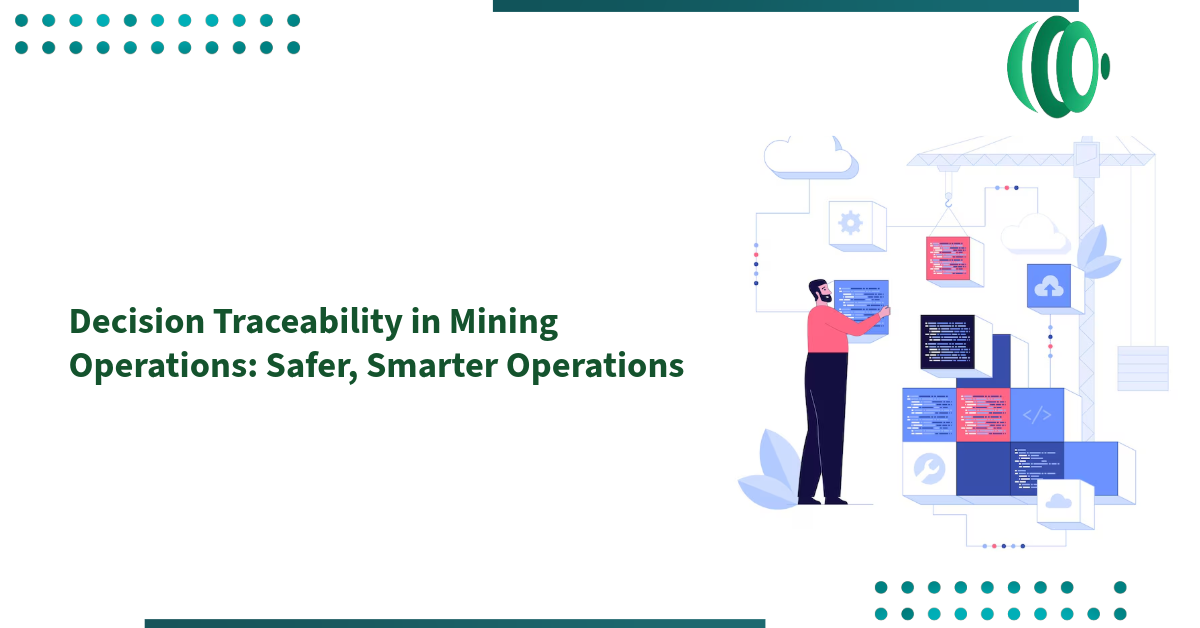
### [Decision Traceability in Mining Operations: Safer, Smarter Operations](https://www.elixirdata.co/blog/decision-traceability-in-mining)
21 April 2026

ElixirData is the Decision Harness for Enterprise AI agents. Context tells AI what's true. Governance tells AI what's allowed.
[Get Demo](https://www.elixirdata.co/context-os/demo/)
### Platform
[Context OS](https://www.elixirdata.co/platform/context-os/) [Build Agents](https://www.elixirdata.co/platform/build-agents/) [Unify Data](https://www.elixirdata.co/platform/unify-data/) [Business Context](https://www.elixirdata.co/platform/business-context/) [Decision Infrastructure](https://www.elixirdata.co/platform/decision-infrastructure/) [Agentic Actions](https://www.elixirdata.co/platform/governed-actions/) [Decision Traces](https://www.elixirdata.co/platform/decisiontraces/)
### Solutions
[Operations & SRE](https://www.elixirdata.co/solutions/operations-sre/) [Security & SOC](https://www.elixirdata.co/solutions/security-and-soc/) [Risk & Compliance](https://www.elixirdata.co/solutions/governance-risk-compliance/) [Finance & Procurement](https://www.elixirdata.co/solutions/finance-and-procurement/) [Agentic Debugging](https://www.elixirdata.co/solutions/agentic-debugging/) [Vision AI](https://www.elixirdata.co/solutions/vision-ai/)
All industries
### Enterprise
[Agent Registry](https://www.elixirdata.co/enterprise/agent-registry/) [AgentOps](https://www.elixirdata.co/enterprise/agentops/) [Agent Identity & Access](https://www.elixirdata.co/enterprise/agent-identity-and-access/) [Evaluation & Optimization](https://www.elixirdata.co/enterprise/evaluation-optimization/) [Trust Center](https://www.elixirdata.co/enterprise/trust-center/) [Data Residency](https://www.elixirdata.co/enterprise/data-residency/) [SLAs & Support](https://www.elixirdata.co/enterprise/ai-sla-support/)
### Integrations
[Databricks](https://www.elixirdata.co/integrations/databricks/) [Looker](https://www.elixirdata.co/integrations/looker/) [Power BI](https://www.elixirdata.co/integrations/power-bi/) [Qlik](https://www.elixirdata.co/integrations/qlik/) [AWS QuickSight](https://www.elixirdata.co/integrations/aws-quicksight/) [SAP](https://www.elixirdata.co/integrations/sap/) [Sigma Computing](https://www.elixirdata.co/integrations/sigma-computing/) [Snowflake](https://www.elixirdata.co/integrations/snowflake/) [Spotfire](https://www.elixirdata.co/integrations/spotfire/) [Tableau](https://www.elixirdata.co/integrations/tableau/) [ThoughtSpot](https://www.elixirdata.co/integrations/thoughtspot/) [Traditional Analytics](https://www.elixirdata.co/integrations/traditional-analytics/)
### Resources
[Executive Blueprint](https://www.elixirdata.co/resources/executive-blueprint/) [Blog](https://www.elixirdata.co/blog/) [Customer Outcomes](https://www.elixirdata.co/resources/customer-outcomes/) [Trust and Assurance](https://www.elixirdata.co/trust-and-assurance/)
### Company
[About Us](https://www.elixirdata.co/about-us/) [Leadership](https://www.elixirdata.co/leadership/) [Careers](https://www.elixirdata.co/careers/) [Press & News](https://www.elixirdata.co/press-and-news/) [Contact](https://www.elixirdata.co/contact-us/)
© 2026 ElixirData | Context OS™ — Making Context Executable, Enforceable, and Governed
Privacy
Terms
Security
Cookies
[LLMS TXT](https://www.elixirdata.co/llms.txt) [LLMS Full TXT](https://www.elixirdata.co/llms-full.txt) [AI Context JSON](https://www.elixirdata.co/ai-context.json)
[Telco](https://www.elixirdata.co/industries/telco/) [Agent Ecosystem](https://www.elixirdata.co/ai-agents/agent-ecosystem/) [Hyperautomation Generative AI Book](https://www.elixirdata.co/newsroom/press-release/hyperautomation-generative-ai-book/) [Resources](https://www.elixirdata.co/resources/) [Audit Agent](https://www.elixirdata.co/ai-agents/audit-agent/) [Approval Agent](https://www.elixirdata.co/ai-agents/approval-agent/) [Decision Review Agent](https://www.elixirdata.co/ai-agents/decision-review-agent/) [Enterprise](https://www.elixirdata.co/enterprise/) [Compliance Agent](https://www.elixirdata.co/ai-agents/compliance-agent/) [Exception Handling Agent](https://www.elixirdata.co/ai-agents/exception-handling-agent/) [ElixirOS](https://www.elixirdata.co/product/elixiros/)
```json
{
"@context" : "https://schema.org",
"@type" : "BlogPosting",
"author" : {
"@type" : "Person",
"name" : "Dr. Jagreet Kaur Gill",
"url" : "https://www.elixirdata.co/blog/author/dr-jagreet-kaur-gill"
},
"dateModified" : "2026-04-21T12:04:12.160Z",
"datePublished" : "2026-04-21T11:58:12.000Z",
"headline" : "Decision Traceability in Mining Operations: Safer, Smarter Operations",
"image" : [ "https://www.elixirdata.co/hubfs/Xenon%20Daily%20Work-1%20-%202026-04-21T141821.165.png" ],
"mainEntityOfPage" : {
"@id" : "https://www.elixirdata.co/blog/decision-traceability-in-mining",
"@type" : "WebPage"
},
"publisher" : {
"@type" : "Organization",
"logo" : {
"@type" : "ImageObject",
"url" : "https://www.elixirdata.co/hubfs/brand/elixirdata-logo.png"
},
"name" : "ElixirData"
}
}
```
```json
{
"@context" : "https://schema.org",
"@id" : "https://www.elixirdata.co/#org",
"@type" : "Organization",
"description" : "ElixirData is the Context OS™ for governed AI execution. Context tells AI what's true. Control tells AI what's allowed.",
"email" : "info@elixirdata.co",
"logo" : {
"@id" : "https://www.elixirdata.co/#logo",
"@type" : "ImageObject",
"url" : "https://assets.elixirdata.co/assets/Logo.png"
},
"name" : "ElixirData",
"sameAs" : [ "https://x.com/Elixir_Data", "https://www.youtube.com/@elixirdata", "https://www.linkedin.com/showcase/elixirdata-context-os-intelligence/" ],
"url" : "https://www.elixirdata.co/"
}
```
```json
{
"@context" : "https://schema.org",
"@id" : "https://www.elixirdata.co/blog/decision-traceability-in-mining#author",
"@type" : "Person",
"description" : "Chief Research Officer and Head of AI and Quantum. Dr. Jagreet Kaur Gill specializes in Generative AI for synthetic data, Conversational AI, and Intelligent Document Processing. With a focus on responsible AI frameworks, compliance, and data governance, she drives innovation and transparency in AI implementation.",
"name" : "Dr. Jagreet Kaur Gill"
}
```
```json
{
"@context" : "https://schema.org",
"@id" : "https://www.elixirdata.co/blog/decision-traceability-in-mining#webpage",
"@type" : "WebPage",
"description" : "Decision traceability in mining ensures that operational and AI-driven decisions across extraction, safety, and compliance are governed, auditable, and explainable.",
"isPartOf" : {
"@id" : "https://www.elixirdata.co/#org"
},
"name" : "Decision Traceability in Mining",
"primaryImageOfPage" : {
"@id" : "https://www.elixirdata.co/blog/decision-traceability-in-mining#primaryimage"
},
"url" : "https://www.elixirdata.co/blog/decision-traceability-in-mining"
}
```
```json
{
"@context" : "https://schema.org",
"@id" : "https://www.elixirdata.co/blog/decision-traceability-in-mining#primaryimage",
"@type" : "ImageObject",
"url" : "https://www.elixirdata.co/hubfs/Xenon%20Daily%20Work-1%20-%202026-04-21T141821.165.png"
}
```
```json
{
"@context" : "https://schema.org",
"@id" : "https://www.elixirdata.co/blog/decision-traceability-in-mining#techarticle",
"@type" : "TechArticle",
"articleSection" : "Decision Infrastructure",
"author" : {
"@id" : "https://www.elixirdata.co/blog/decision-traceability-in-mining#author"
},
"dateModified" : "2026-04-21",
"datePublished" : "2026-04-21",
"description" : "Mining operations require decision traceability infrastructure to ensure safety, compliance, and explainability across extraction, logistics, and AI-driven operational workflows.",
"headline" : "Decision Traceability in Mining: Governing AI and Operational Decisions in Industrial Environments",
"image" : {
"@id" : "https://www.elixirdata.co/blog/decision-traceability-in-mining#primaryimage"
},
"keywords" : [ "Mining AI", "Decision Traceability", "Decision Infrastructure", "Context OS", "AI Governance", "Industrial AI", "Operational Safety", "Explainable AI" ],
"mainEntityOfPage" : {
"@id" : "https://www.elixirdata.co/blog/decision-traceability-in-mining#webpage"
},
"publisher" : {
"@id" : "https://www.elixirdata.co/#org"
}
}
```
```json
{
"@context" : "https://schema.org",
"@id" : "https://www.elixirdata.co/blog/decision-traceability-in-mining#definedterm-traceability",
"@type" : "DefinedTerm",
"description" : "A governance framework that captures context, policy, reasoning, and execution to ensure every mining decision is explainable, auditable, and compliant.",
"inDefinedTermSet" : "https://www.elixirdata.co/blog/tag/decision-infrastructure",
"name" : "Decision Traceability Infrastructure",
"termCode" : "DECISION_TRACEABILITY"
}
```
```json
{
"@context" : "https://schema.org",
"@id" : "https://www.elixirdata.co/blog/decision-traceability-in-mining#faq",
"@type" : "FAQPage",
"mainEntity" : [ {
"@id" : "https://www.elixirdata.co/blog/decision-traceability-in-mining#q1",
"@type" : "Question",
"acceptedAnswer" : {
"@id" : "https://www.elixirdata.co/blog/decision-traceability-in-mining#a1",
"@type" : "Answer",
"text" : "Mining operations involve safety-critical decisions related to extraction, equipment, and workforce safety. Decision traceability ensures accountability, compliance, and incident analysis."
},
"name" : "Why is decision traceability important in mining operations?"
}, {
"@id" : "https://www.elixirdata.co/blog/decision-traceability-in-mining#q2",
"@type" : "Question",
"acceptedAnswer" : {
"@id" : "https://www.elixirdata.co/blog/decision-traceability-in-mining#a2",
"@type" : "Answer",
"text" : "It is a system that records context, policies, and execution data for each decision, ensuring that mining operations and AI systems are governed and auditable."
},
"name" : "What is decision traceability infrastructure in mining?"
}, {
"@id" : "https://www.elixirdata.co/blog/decision-traceability-in-mining#q3",
"@type" : "Question",
"acceptedAnswer" : {
"@id" : "https://www.elixirdata.co/blog/decision-traceability-in-mining#a3",
"@type" : "Answer",
"text" : "Context OS connects operational data, policies, and execution layers, ensuring that mining decisions align with safety standards, regulatory requirements, and operational constraints."
},
"name" : "How does Context OS improve mining operations?"
}, {
"@id" : "https://www.elixirdata.co/blog/decision-traceability-in-mining#q4",
"@type" : "Question",
"acceptedAnswer" : {
"@id" : "https://www.elixirdata.co/blog/decision-traceability-in-mining#a4",
"@type" : "Answer",
"text" : "Without traceability, mining organizations face safety risks, compliance failures, inability to audit decisions, and challenges in incident investigations."
},
"name" : "What risks exist without decision traceability in mining?"
} ]
}
```
```json
{
"@context" : "https://schema.org",
"@id" : "https://www.elixirdata.co/blog/decision-traceability-in-mining#breadcrumb",
"@type" : "BreadcrumbList",
"itemListElement" : [ {
"@type" : "ListItem",
"item" : "https://www.elixirdata.co/",
"name" : "Home",
"position" : 1
}, {
"@type" : "ListItem",
"item" : "https://www.elixirdata.co/blog",
"name" : "Blog",
"position" : 2
}, {
"@type" : "ListItem",
"item" : "https://www.elixirdata.co/blog/tag/decision-infrastructure",
"name" : "Decision Infrastructure",
"position" : 3
}, {
"@type" : "ListItem",
"item" : "https://www.elixirdata.co/blog/decision-traceability-in-mining",
"name" : "Decision Traceability in Mining",
"position" : 4
} ]
}
```