Agentic finance for insurance combines governed enterprise context, deterministic financial analytics, and AI-agent workflows to explain why metrics such as Average Premium changed (with reconciled driver attribution, traceable evidence, and human oversight) while Excel and SharePoint remain familiar working surfaces.
Key Takeaways
- Agentic finance for insurance should explain why financial performance changed, not merely retrieve figures or generate commentary.
- A governed context layer connects policy, premium, claims, channel, geography, finance definitions, and approved business knowledge.
- Deterministic attribution models should calculate driver contributions; language models should interpret validated outputs rather than invent percentages.
- ElixirData supplies decision-ready context, ElixirClaw orchestrates governed investigations, ElixirHub manages reusable skills, and Agentic AI presents the result.
- Excel and SharePoint can remain familiar working surfaces while definitions, controls, lineage, and reusable analytical logic move into an enterprise platform layer.
- A practical first use case is premium variance analysis with reconciliation, evidence, human oversight, and measurable reductions in analysis cycle time.
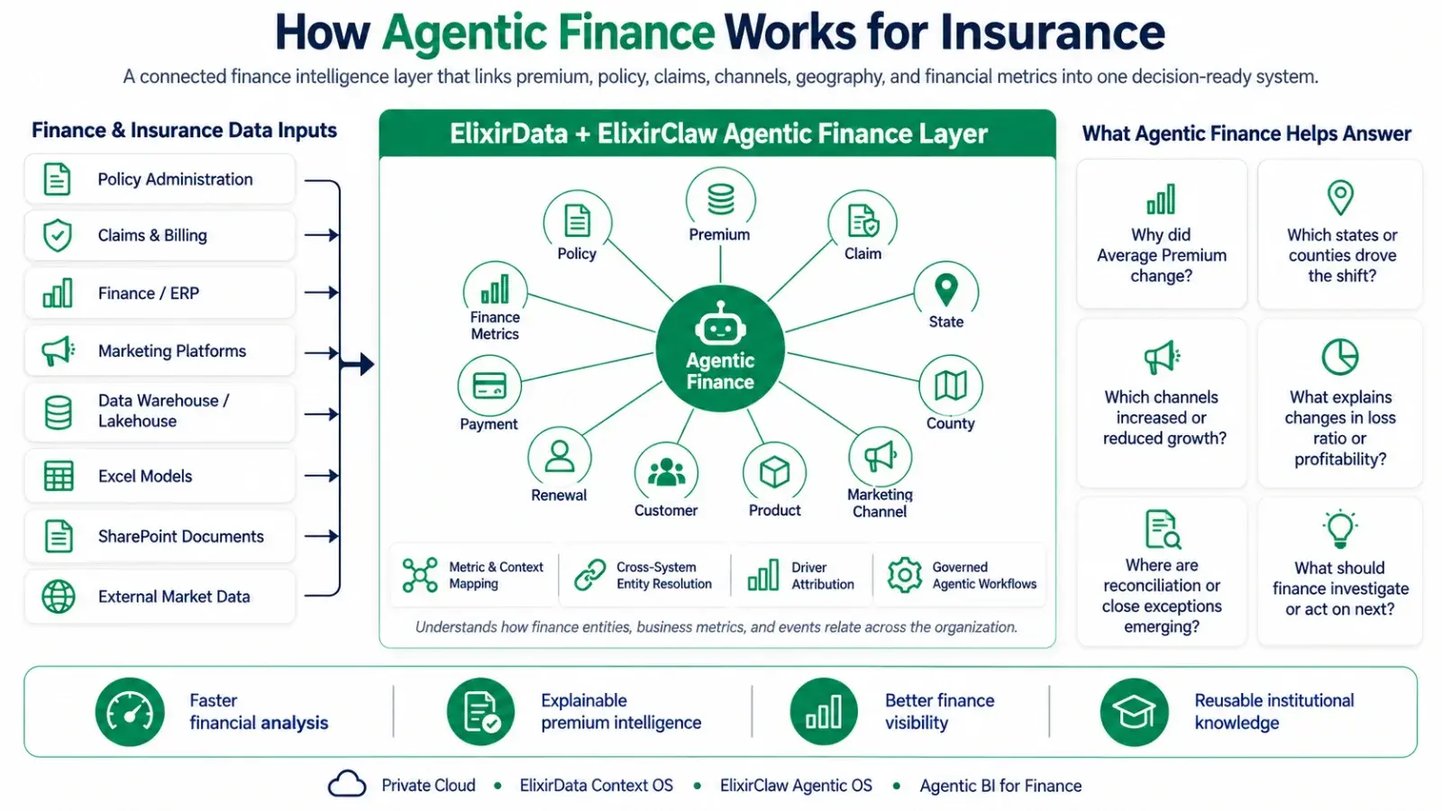
Figure 1: Agentic finance works for Insurance
See how Context OS governs AI agent decisions
Context OS gives finance agents approved metric definitions, lineage and evidence before they explain a number.
Why Does Finance Not Need Another Chatbot?
Insurance finance teams already have data warehouses, business intelligence platforms, Excel models, SharePoint repositories, and experienced analysts. The problem is that the organization cannot calculate a number. The problem is that explaining why the number changed still requires significant manual work across disconnected systems, spreadsheets, and business definitions.
Consider a question that sounds simple: “Why did New Business Average Premium increase from January to March?” A dashboard can show the movement. Natural-language SQL can retrieve the two values. A generative AI assistant can summarize a few data points. But a CFO, FP&A leader, or finance analyst needs a deeper answer: how much of the movement came from marketing-channel mix, how much came from state and county mix, how much reflected true underlying premium movement, whether those drivers reconcile mathematically to the total change, and where the business should investigate next.
|
The shift: Agentic Finance moves the operating model from Question → SQL → Chart to Question → Context → Investigation → Quantified Attribution → Explanation → Decision → Governed Action. |
That is the core opportunity. The objective is not to put a large language model directly on top of financial tables and hope it reasons correctly. The objective is to combine trusted enterprise context, deterministic finance analytics, agent orchestration, visual intelligence, and human governance so the system can produce explanations that are both useful and defensible.
What Is the Current State of Spreadsheet-Led Finance Investigation?
Even in organizations with modern data platforms, finance work often moves through a familiar chain. Data is extracted from policy, claims, marketing, or finance systems. Analysts move it into Excel, combine it with assumptions and reference tables, share files through SharePoint, build pivots and formulas, investigate variances, and then manually convert the findings into management commentary.
This model is flexible, but it creates four structural problems. First, important context is distributed across systems and documents. Second, metric definitions can vary between teams. Third, the analytical method used to explain a variance is often embedded in an individual spreadsheet. Fourth, every new “why” question triggers another manual investigation.
- Finance spends time assembling evidence rather than interpreting business performance.
- Different analysts can reach different answers because definitions, filters, or decomposition methods differ.
- Executive narratives are separated from the analytical evidence used to produce them.
- The organization accumulates knowledge in workbooks instead of a reusable institutional intelligence layer.
Agentic Finance does not require finance teams to abandon Excel or SharePoint. Instead, it changes their role. Excel can remain a familiar consumption and collaboration surface, while context management, attribution logic, data quality, agent reasoning, and governance move into an enterprise-grade platform layer.
What Is the Target Operating Model, From Reporting to Investigation?
The target experience begins with a business question rather than a dashboard navigation path. When a user asks why a financial metric changed, the system must understand the metric, locate the approved definition, identify relevant dimensions, validate data readiness, select the right analytical method, quantify the drivers, reconcile the result, and explain it in business language.
This creates a clear separation of responsibilities. ElixirData supplies a trusted business context. Custom analytical capabilities perform calculations such as premium attribution, forecasting, anomaly detection, or reconciliation. ElixirClaw plans and executes the investigation, applies permissions and guardrails, and invokes approved tools through governed interfaces such as the Model Context Protocol (MCP). Agentic AI presents the result through natural-language analysis, dashboards, charts, and management commentary. ElixirHub stores reusable skills once investigation patterns have been proven.
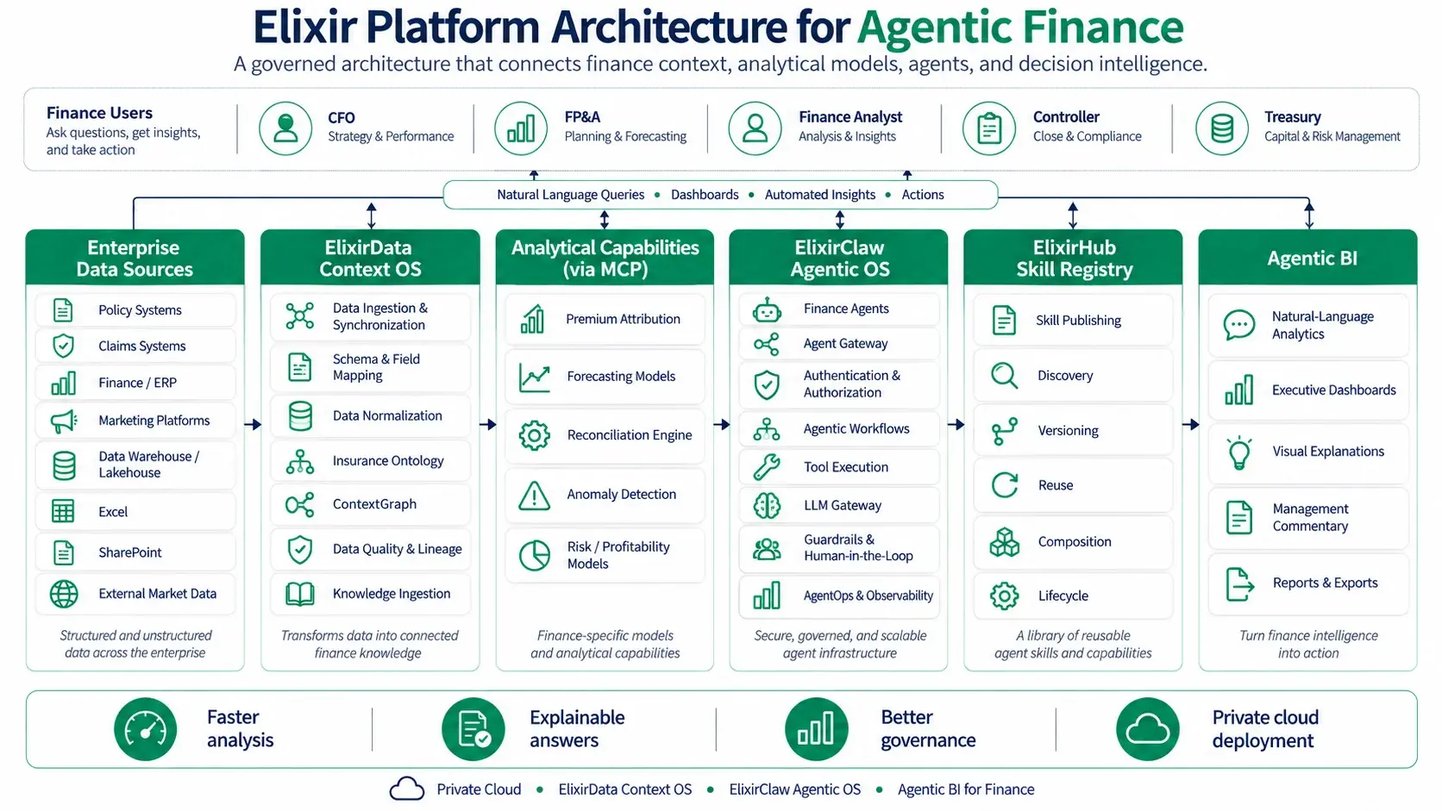 Figure 2: Elixirdata Platform Architecture for Agentic Finance
Why Build the Finance and Insurance Context First With ElixirData?
Reliable Agentic Finance depends on business meaning, not just database access. A model seeing a column called premium_amount does not automatically know whether it represents written premium, earned premium, quoted premium, new business premium, or a reporting adjustment. It also does not know which geography, channel, product, policy cohort, or accounting period should be associated with that value.
ElixirData acts as the Context OS. It synchronizes relevant enterprise data, maps schemas and fields, normalizes entities, applies insurance ontology, manages data quality and lineage, captures temporal relationships, and ingests business knowledge from approved sources. The result is a Finance and Insurance ContextGraph that connects operational entities with business metrics and definitions.
A policy can be connected to a customer, product, state, county, marketing channel, premium, claim, renewal, and payment. Those operational entities can then connect to finance metrics such as Average Premium, Premium in Force, Gross Written Premium, retention, acquisition cost, loss ratio, expense ratio, operating margin, and cash flow. Context becomes reusable across many finance questions instead of being recreated inside each spreadsheet.
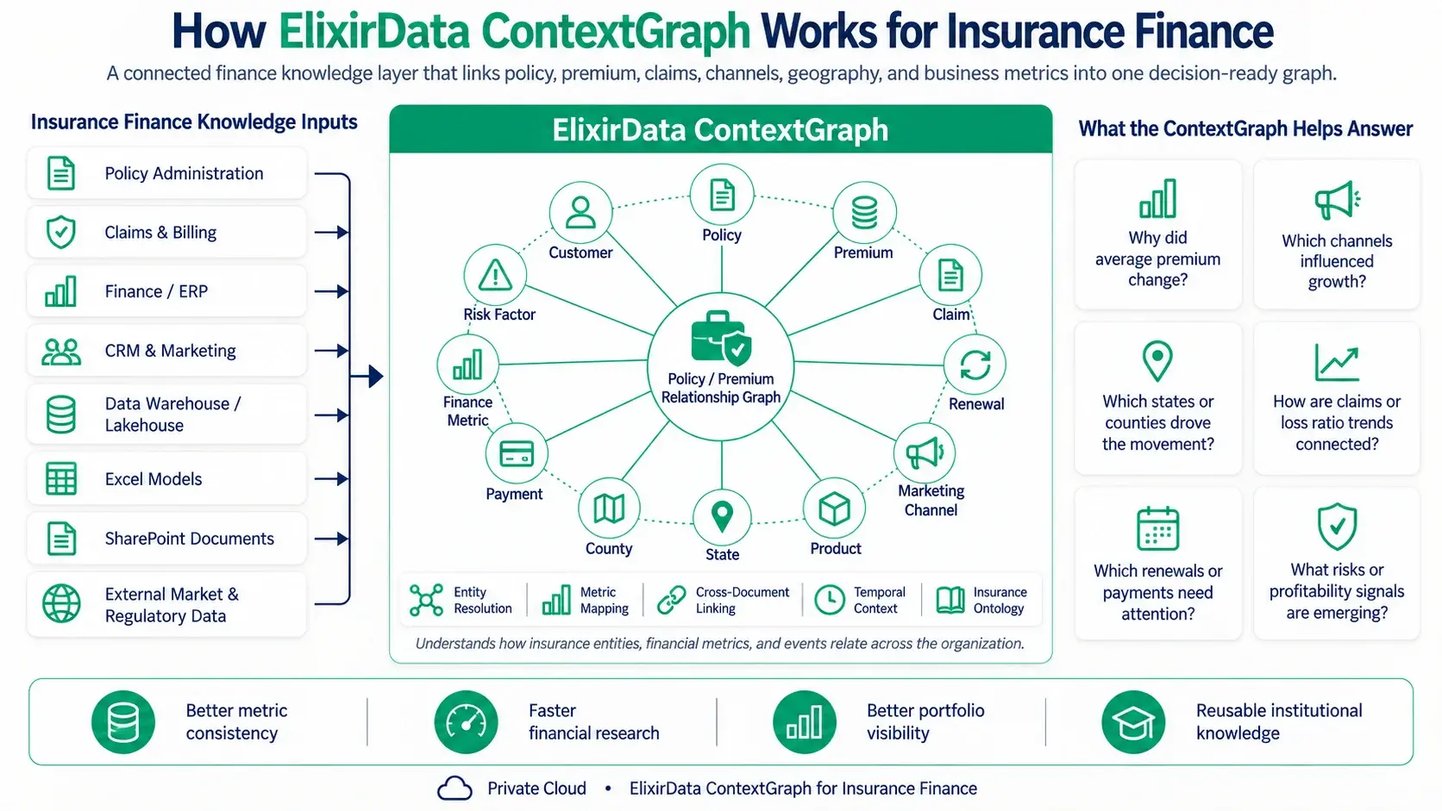 Figure 3: ContextGraph works for Insurance Finance
How Do You Explain Why the Average Premium Changed?
The Average Premium scenario is an ideal first use case because it demonstrates the difference between data retrieval and genuine decision intelligence. Suppose an insurer operates across multiple states, each containing several counties, and acquires new business through Search, Click Leads, and Data Leads. Search historically carries a higher Average Premium, Click Leads sits in the middle, and Data Leads carries a lower Average Premium.
If Search represents a larger share of March business than January, the total Average Premium can rise even if nothing has changed within individual policy segments. A similar effect can occur if the business shifts toward states or counties that historically have higher premiums. At the same time, the underlying Average Premium may also rise within comparable segments. The final company-level movement can therefore be the result of several effects occurring simultaneously.
The system needs to distinguish channel mix, state mix, county mix, product or risk mix, true underlying premium movement, and interaction effects. Crucially, the percentages cannot be invented by the language model. They need to come from a deterministic attribution capability that reconciles the individual drivers to the observed portfolio change.
At a simplified level, portfolio Average Premium can be represented as the sum of segment weight multiplied by segment Average Premium. A segment might be State × County × Marketing Channel × Product. Changes between periods can then be decomposed into mix effects and within-segment premium effects. For more complex hierarchies, the analytical service can use an order-independent method to allocate interaction effects consistently.
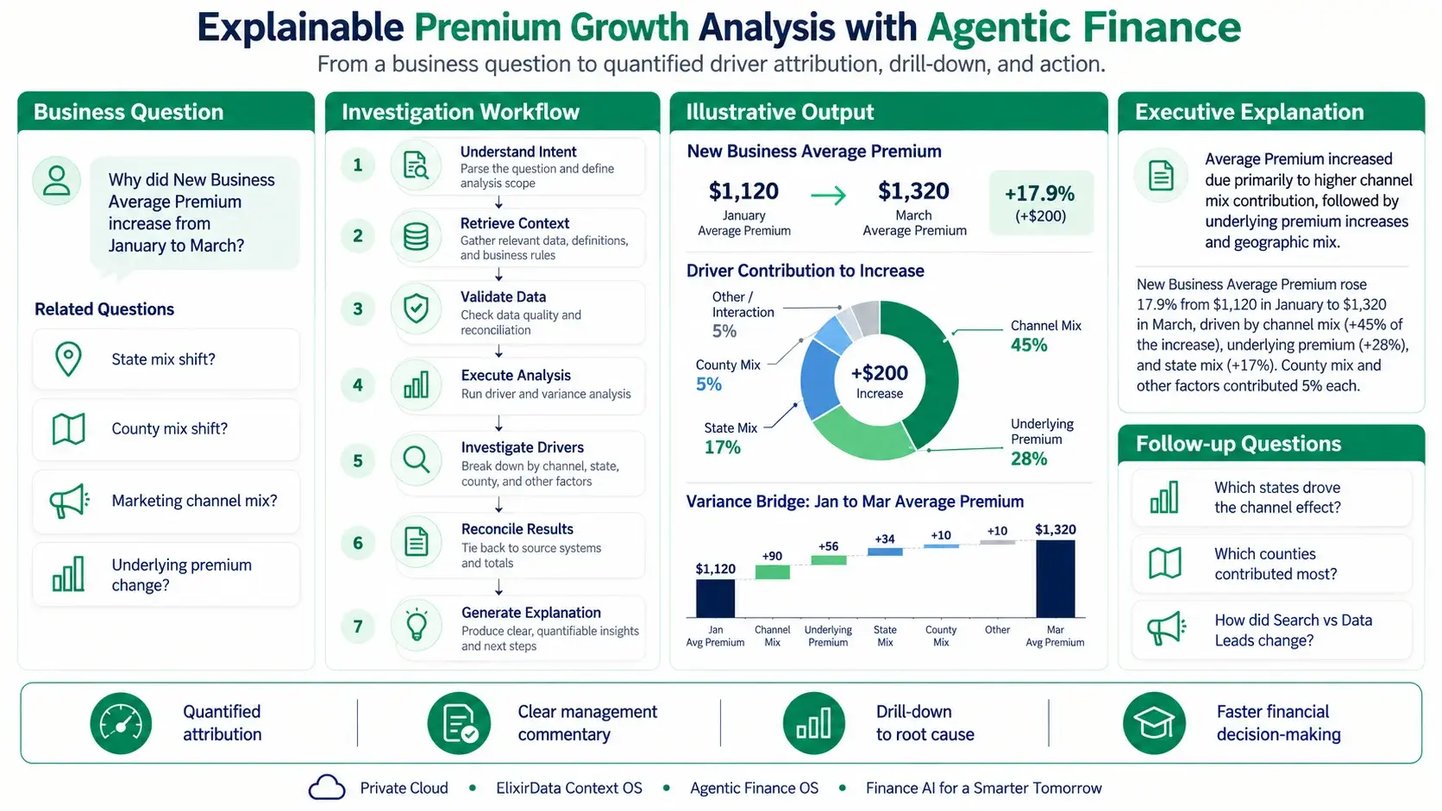 Figure 4: Explainable premium growth analysis with agentic finance
How Does ElixirClaw Turn the Question Into a Multi-Step Investigation?
ElixirClaw provides the Agentic OS that coordinates the investigation. Instead of immediately generating SQL, the Finance Agent first interprets the intent: the requested metric, periods being compared, level of explanation required, and relevant business dimensions. It then retrieves the approved metric context from ElixirData and checks whether the underlying data is complete, fresh, and suitable for analysis.
Once the baseline variance is established, ElixirClaw invokes the premium attribution capability through MCP. If channel mix is the largest driver, the agent can automatically drill into the states contributing to that effect, then inspect the counties and source channels inside those states. It can continue until the result is detailed enough for the user, while maintaining the same analytical context across follow-up questions.
Before producing the final narrative, the agent verifies that the decomposed contributions reconcile to the observed financial movement within an approved tolerance. The output then becomes an executive explanation backed by the calculation, the underlying data, the metric definition, and the investigation path.
|
Architectural principle: The analytical engine calculates. ElixirClaw investigates and orchestrates. ElixirData provides meaning and evidence. Agentic AI explains the result. Human users retain control over material decisions and actions. |
Agentic AI: One Coherent Answer, Not Ten Data Points
Finance leaders do not want ten disconnected query results. They want one coherent explanation. Agentic AI should therefore combine an executive summary, the overall metric movement, a driver-contribution bridge, state and county analysis, channel trends, supporting visualizations, and the written narrative into one response.
For example, the user may see that Average Premium increased by 17.9%, with 45% of the increase associated with channel mix, 28% with underlying premium changes, 17% with geography, and 10% with other or interaction effects. The visual layer can show a variance waterfall and contribution chart, while the narrative explains which channels, states, or counties created the movement. The user can then continue with questions such as “Which states drove the channel effect?” or “Within Florida, was the movement driven by county mix or underlying premium?”
Because the written explanation and charts are generated from the same validated analytical output, the experience is more consistent than producing a chart first and asking an LLM to improvise commentary afterward.
Get the Executive Blueprint for governed enterprise AI
A practical guide for CIOs, CAIOs and risk leaders on moving AI agents from pilot to production without losing control of context or decisions.
How Does the Same Foundation Expand Across Agentic Finance for Insurance?
The strategic value comes from reusing the same context and agent architecture across the Office of the CFO. Average Premium attribution can be the entry point, but the target platform should support a broader portfolio of finance use cases.
| Finance Domain | Representative Agentic Finance Use Cases |
| FP&A | Budget vs actual analysis, rolling forecasts, scenario modeling, management commentary |
| Insurance Finance | Average Premium, Gross Written Premium, Premium in Force, loss ratio, retention, acquisition economics, portfolio profitability |
| Accounting & Close | Reconciliation, journal review, accrual support, intercompany analysis, continuous close readiness |
| Accounts Payable | Invoice validation, PO/contract matching, payment exceptions, supplier analytics |
| Accounts Receivable | Collections prioritization, disputes, cash application, and customer/account intelligence |
| Treasury & Working Capital | Cash forecasting, liquidity analysis, DSO/DPO drivers, funding, and bank exposure |
| Controls & Audit | Transaction anomalies, control exceptions, audit evidence, policy compliance, and risk monitoring |
How Do You Move From Excel and SharePoint to a Governed Finance Knowledge Layer?
Finance users should not be told that transformation requires abandoning familiar tools. Excel can remain an important modeling and review environment, and SharePoint can continue to hold approved finance documents, policies, contracts, and work products. The transformation is architectural: the organization stops depending on individual workbooks as the place where data integration, definitions, analytical logic, and institutional knowledge all converge.
With Agentic Finance, approved Excel and SharePoint content can become part of the enterprise context. ElixirData captures relevant definitions and relationships. ElixirClaw accesses those sources through governed workflows and connectors. Finance outputs can still be exported back to Excel or reports when collaboration requires it. The user keeps the interface; the enterprise replaces the hidden manual orchestration behind it.
How Does ElixirHub Turn Proven Finance Investigations Into Reusable Skills?
Once an investigation pattern is validated, it should be standardized rather than reimplemented through prompts. ElixirHub serves as the pure skill registry for reusable packages such as analyze-premium-variance, investigate-channel-mix, investigate-geographic-mix, analyze-budget-vs-actual, perform-financial-reconciliation, investigate-loss-ratio, and generate-management-commentary.
These skills can be published, discovered, versioned, installed, composed, and managed through their lifecycle. ElixirHub does not own connectors, authentication, runtime governance, or data mapping. Those remain with ElixirClaw and ElixirData. This separation makes the architecture easier to govern and lets the organization scale successful finance practices across teams without duplicating logic.
Why Run Enterprise AI on Private Cloud?
Finance and insurance data can include sensitive policy information, financial metrics, claims data, customer context, management reporting, and commercially important operating assumptions. An enterprise deployment, therefore, needs control over where context is stored, which models can access it, which users or agents can invoke tools, and which actions require human approval.
A private-cloud deployment can keep the ContextGraph, finance metrics, agent traces, analytical inputs and outputs inside the customer-controlled environment. ElixirClaw provides authentication and authorization, data and agent permissions, the LLM Gateway, decision boundaries, guardrails, human-in-the-loop controls, secure execution, AgentOps, and evaluation. A CFO may receive enterprise-wide portfolio analysis, while a regional leader or marketing user can be restricted to the business context they are authorized to see.
The goal is not autonomy without control. The goal is to automate investigation and low-risk workflow steps while keeping material financial decisions within explicit policy and human oversight.
How Does Governance Align for Insurance Finance?
Insurance AI governance should connect model validation, data quality, access control, human authority, and audit evidence. The NAIC Model Bulletin on the Use of Artificial Intelligence Systems by Insurers provides a model for regulatory expectations around a written AI systems program; adoption and enforcement vary by jurisdiction. The NIST AI Risk Management Framework provides a voluntary risk-management structure, while the COSO Internal Control Integrated Framework provides a widely used internal-control lens for operations, reporting, and compliance.
- Validate analytical models and thresholds against finance-approved benchmark cases before production use.
- Enforce role, portfolio, geography, and purpose-based access before retrieving sensitive policy or claims context.
- Require human approval for material financial decisions, external reporting changes, and actions outside delegated authority.
- Retain decision traces that connect each conclusion to data, metric definitions, model versions, policies, approvals, and outcomes.
- Monitor data drift, analytical reconciliation, policy violations, override patterns, and the quality of management commentary.
A Practical Adoption Path
The safest path is to start with a small number of high-value questions and build depth before breadth. The first release can establish the Finance ContextGraph around policy, premium, geography, marketing channel, and time; implement Average Premium and premium-growth attribution; support multi-step investigation through ElixirClaw; and provide written analysis plus visual explanation through Agentic AI.
The second stage can expand into budget-versus-actual analysis, management commentary, and reconciliation. The third can add predictive capabilities such as rolling forecasts, cash forecasting, and scenario analysis through specialized models exposed over MCP. Later stages can introduce continuous controls and govern financial actions with human approval thresholds.
This staged approach creates a reusable platform foundation while delivering visible business value early. It also allows each analytical capability and agent workflow to be evaluated against finance-approved benchmarks before increasing autonomy.
Conclusion: From Finance Reporting to Explainable Decision Intelligence
Agentic Finance should not be positioned as another chatbot for insurance reporting. Its value is in connecting enterprise context, specialized analytics, agentic investigation, visual explanation, and governance into one operating model for the Office of the CFO.
The journey can begin with a single question: “Why did Average Premium change?” But once the architecture is established, the same foundation can help answer why Gross Written Premium moved, why loss ratio deteriorated, which channel is changing acquisition economics, where cash pressure is emerging, which reconciliation exception requires attention, and what is likely to happen next quarter.
|
The end-state: Enterprise Data + Finance Context + Analytical Models + Agentic Investigation + Governance = Explainable Finance Decision Intelligence. |
The transformation is therefore not from Excel to AI. It is from a fragmented, person-dependent financial investigation to a connected and reusable decision-intelligence layer, while preserving the finance controls, evidence, and human judgment required to operate with confidence.
Take the next step
Download the Executive Blueprint, or talk to our team about agentic finance for your insurance organization.
ElixirData: Frequently Asked Questions
-
What is agentic finance for insurance?
Agentic finance for insurance combines a governed enterprise context, deterministic financial analytics, and AI-agent workflows to investigate performance, explain drivers, and coordinate approved actions. It can support FP&A, premium analysis, reconciliation, forecasting, close, treasury, and control activities while retaining evidence and human authority. -
How is agentic finance different from traditional business intelligence?
Traditional business intelligence primarily reports what happened through dashboards and predefined metrics. Agentic finance begins with a business question, retrieves the approved metric definition, validates the relevant data, invokes the correct analytical method, reconciles the result, and produces an explanation with traceable evidence and governed follow-up steps. -
How can agentic finance explain why the average premium changed?
A deterministic attribution capability can decompose the movement into channel mix, geography, product or risk mix, within-segment premium changes, and interaction effects. The agent orchestrates the investigation and explains the validated result, while the analytical engine calculates the contributions and reconciles them to the observed portfolio change. -
Can insurers continue using Excel and SharePoint?
Yes. Excel can remain a modeling, review, and export surface, while SharePoint can continue to hold approved policies, definitions, and work products. The architecture moves identity resolution, metric definitions, lineage, reusable analytical logic, and governance into a shared platform layer so knowledge is not trapped inside individual workbooks.